How to Choose an Excavation Contractor in San Antonio: What to Look For
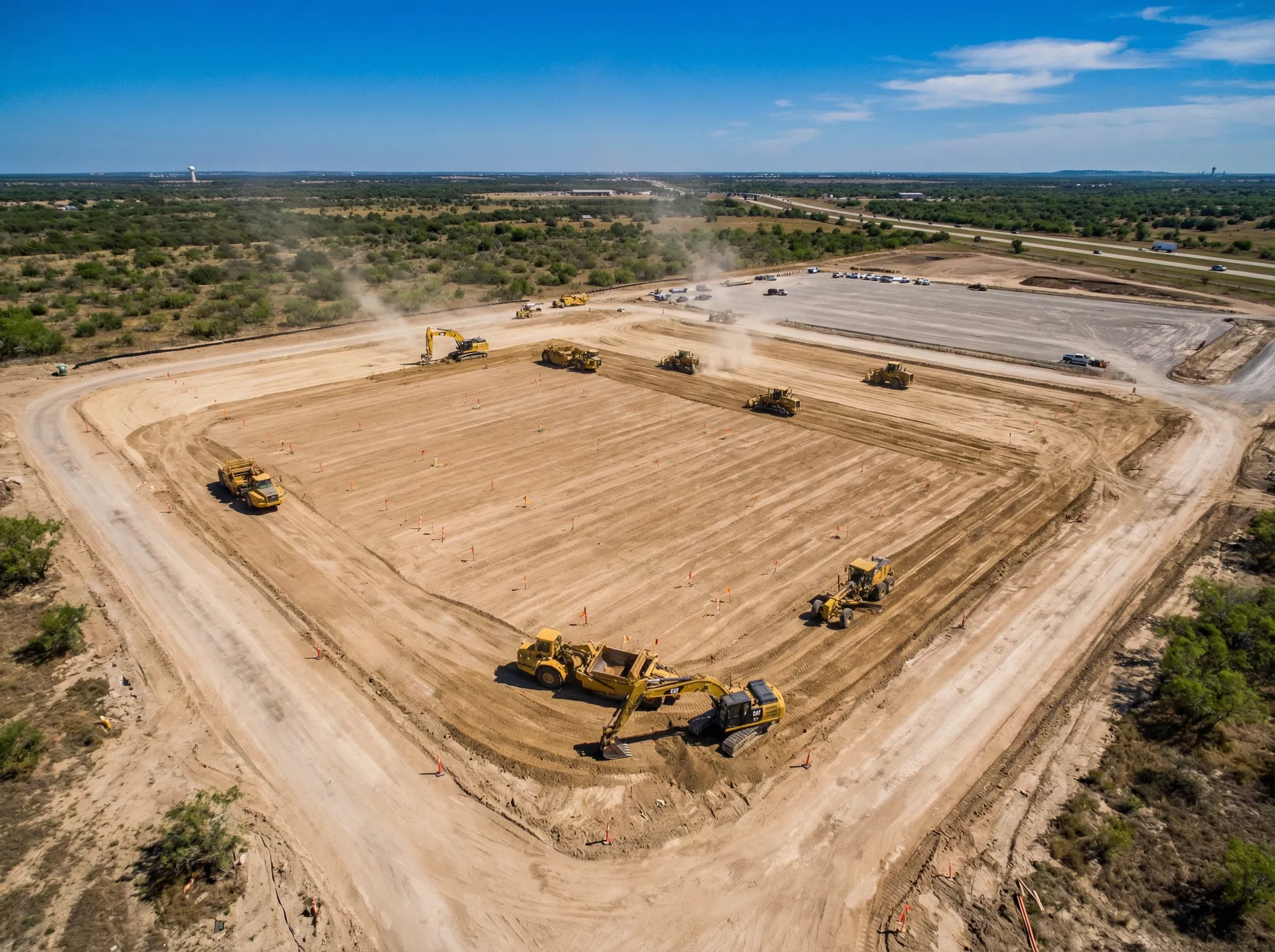
Hiring the wrong excavation contractor is one of the most expensive mistakes you can make on a construction or development project. Unlike a bad paint job or a poorly installed floor, excavation mistakes — improper grading, failed utility connections, unstable pad preparation — can compromise an entire structure and cost tens of thousands of dollars to correct.
This guide covers the seven questions every homeowner and general contractor should ask before hiring an excavation contractor in San Antonio, Austin, or Houston.
1. Are You Licensed, Bonded, and Insured in Texas?
This is the baseline. Any contractor performing excavation, demolition, or utility work in Texas must hold the appropriate state and local licenses. Ask for the license number and verify it. Ask for a certificate of insurance showing general liability coverage and workers' compensation.
For commercial projects, most general contractors require subcontractors to carry a minimum of $1 million in general liability coverage. Verify the coverage amount matches your project requirements before signing a contract.
2. Do You Hold SAWS or ROW Certification?
If your project involves utility installation in San Antonio, SAWS (San Antonio Water System) certification is required. If your project involves work in a public right-of-way, ROW (Right of Way) certification from the City of San Antonio is required.
These certifications are not held by most contractors — they require elevated insurance, surety bonds, and background checks. A contractor who claims to do utility work without SAWS certification is either uninformed or planning to do the work illegally.
3. Can You Show Me Completed Projects Similar to Mine?
Ask for photos, references, or a project gallery showing work similar to yours. A contractor who does residential lot clearing should be able to show you residential lot clearing projects. A contractor claiming commercial site work experience should be able to show you commercial sites.
Be skeptical of contractors who can't produce any project photos. Every legitimate excavation contractor takes job site photos.
4. What Equipment Will You Use on My Project?
The right equipment for your project matters. A contractor with only a small skid steer may not be able to efficiently handle a large commercial site. A contractor with only a large excavator may damage a tight residential lot. Ask what equipment they plan to use and why it's appropriate for your project scope.
Also ask whether they own their equipment or rent it. Contractors who own their fleet generally have better equipment availability and lower mobilization costs.
5. How Do You Handle Unexpected Conditions?
Texas soil conditions can surprise even experienced contractors — caliche rock, buried debris, unexpected utility lines, and expansive clay can all affect project scope and cost. Ask how the contractor handles these situations: do they stop and call you, do they proceed and bill extra, or do they have a defined change order process?
A professional contractor will have a clear change order process and will communicate before proceeding with work outside the original scope.
6. What Does Your Quote Include and Exclude?
Excavation quotes vary widely in what they include. Make sure you understand whether the quote covers:
- Debris disposal or just pushing it to a pile
- Root removal or surface clearing only
- Final grading or just rough grading
- Permit fees (if required)
- Utility locates (call 811 before digging)
The lowest quote is often the one with the most exclusions. Compare quotes on an apples-to-apples basis.
7. What Are Your Payment Terms?
Be cautious of contractors who demand full payment upfront. A standard payment structure for excavation work is a deposit at contract signing (typically 25–33%), progress payments tied to project milestones, and a final payment upon completion and your approval.
Never pay the final payment until you have inspected the work and are satisfied with the result.
Why General Contractors Choose J316 Excavation
J316 Excavation is a licensed, bonded, and insured excavation contractor serving San Antonio, Austin, Houston, and surrounding Texas communities. We hold SAWS certification for utility installation and ROW certification with the City of San Antonio — credentials that most excavation contractors in the area do not hold.
We work regularly as a subcontractor for general contractors on commercial and residential projects. Certificates of insurance are available upon request. Call (210) 425-8108 to discuss your project.